Stainless Steel Kitchenware Factory Logistics & Wholesale Supply | HEQIA
HEQIA HARDWARE · FACTORY INSIGHTS & GLOBAL WHOLESALE SUPPLY
From Factory to Global Markets: How Warehouse Logistics and Order Preparation Support Stainless Steel Kitchenware Wholesale
For international kitchenware buyers, successful sourcing involves more than selecting the right products. Behind every wholesale order is a series of important operations, including manufacturing coordination, warehouse storage, product identification, packaging preparation, and logistics planning.
These processes help connect factory production with the practical requirements of importers, distributors, retailers, and commercial kitchen suppliers.
At HEQIA HARDWARE, we understand that clear product specifications and effective order coordination are important parts of stainless steel kitchenware sourcing. Our product collection includes stainless steel wire skimmers, mesh strainers, four-wire strainers, double-fork strainers, and other practical kitchen utensils available in different specifications.
In this article, we explore how warehouse logistics, bulk packaging, and order preparation contribute to the stainless steel kitchenware wholesale supply process.
Inside the Factory: A Closer Look at Warehouse Logistics
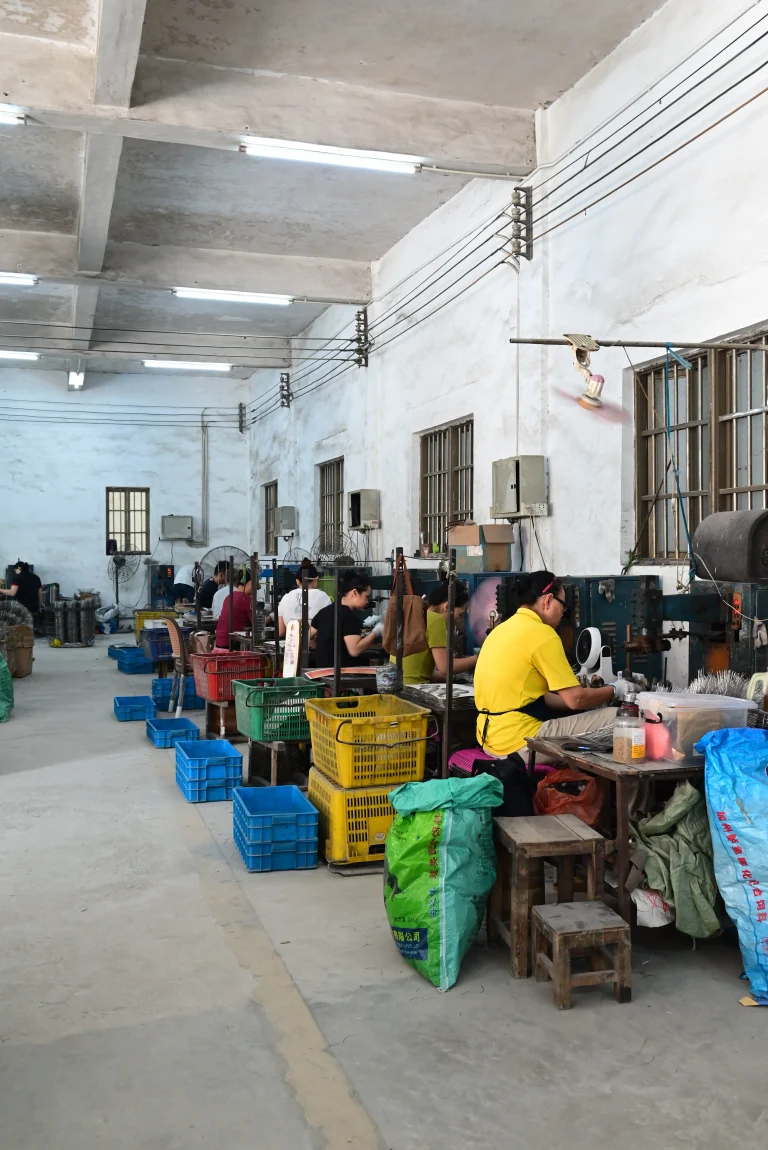
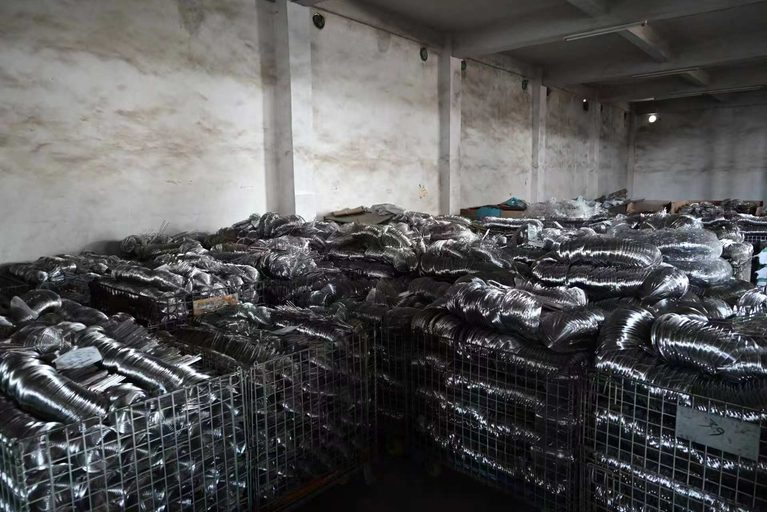
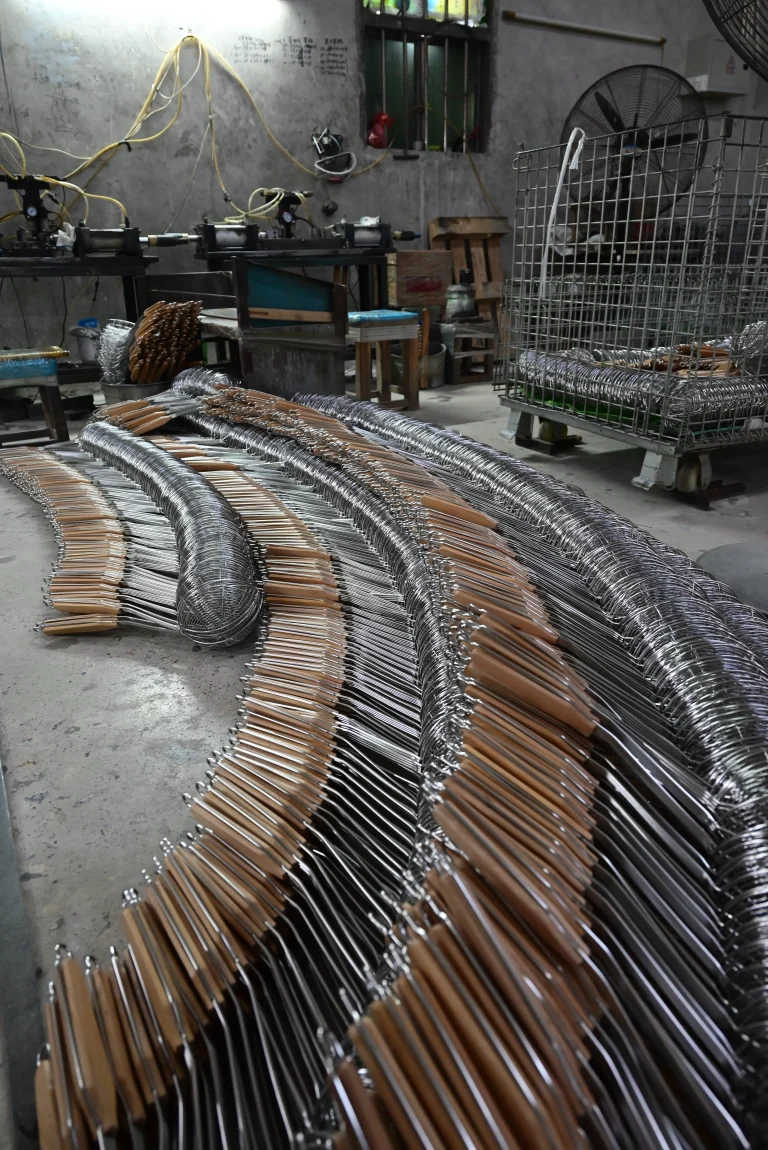
The factory photograph shows a spacious industrial passageway with packaged goods, metal storage cages, and stainless steel kitchenware components arranged along both sides.
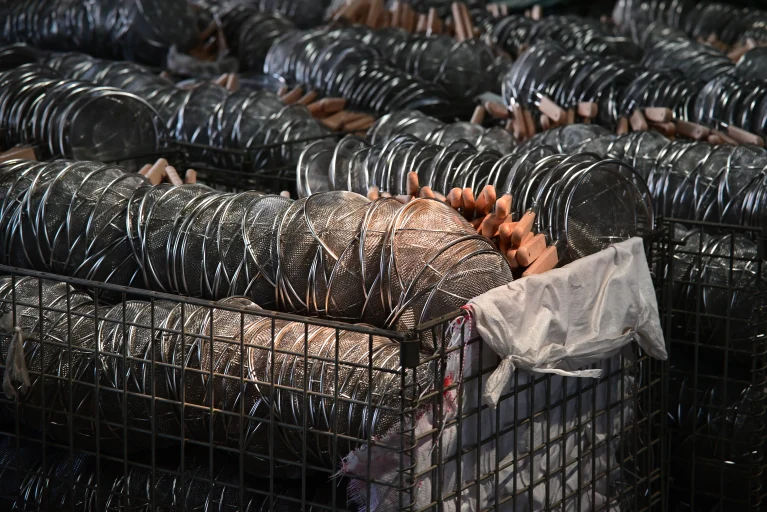
Large wrapped packages are stacked in designated areas, while metal containers hold quantities of circular stainless steel wire and mesh components. The central passage provides access between different sections of the facility.
This scene illustrates the physical space required to handle materials, semi-finished products, packaged goods, and other items associated with kitchenware manufacturing.
For factories producing multiple kitchenware models, storage and material movement are important operational considerations. Different product sizes, handle structures, and manufacturing stages require suitable organization to support production and order preparation.
Why Factory Logistics Matter for Wholesale Kitchenware
Factory logistics refers to the movement, handling, and organization of materials and products within a manufacturing facility.
In stainless steel kitchenware production, logistics activities may involve transferring raw materials to production workstations, moving formed components between manufacturing stages, storing semi-finished products, and preparing completed goods for packaging.
Effective logistics planning can support several important manufacturing objectives.
- Material Movement: Helps coordinate the transfer of components between different production areas.
- Product Organization: Supports the identification and separation of different kitchenware models.
- Production Coordination: Helps ensure that required materials and components are available for subsequent operations.
- Inventory Handling: Supports practical storage and movement of products during manufacturing.
- Order Preparation: Makes it easier to locate and verify products required for wholesale orders.
- Packaging Coordination: Helps connect completed product handling with packing and shipment preparation.
For international buyers, these operational factors can influence how efficiently orders move through the manufacturing and supply process.
From Manufacturing Components to Finished Kitchenware
Stainless steel kitchen utensils typically pass through several stages before they are ready for distribution.
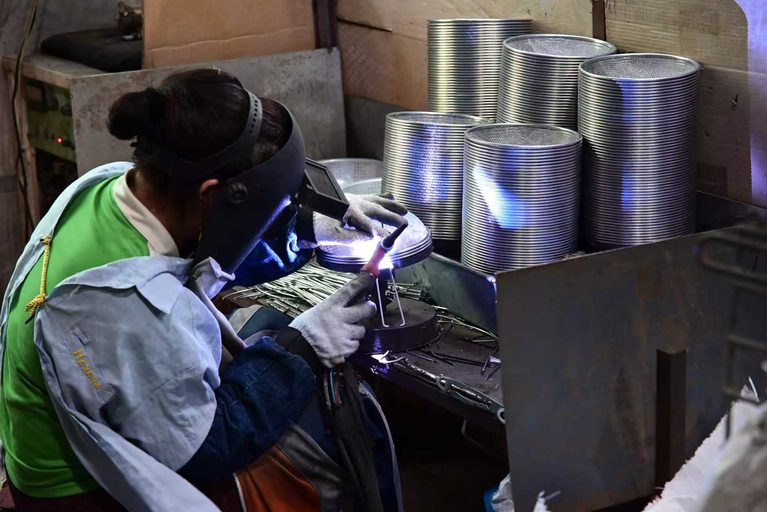
For products such as wire skimmers and mesh strainers, the manufacturing process may include material preparation, metal forming, basket assembly, welding, handle installation, surface finishing, and product inspection.
Each stage may involve different components and equipment. As a result, factories often need suitable storage areas for products that are waiting for additional processing.
For example, formed stainless steel wire baskets may be stored temporarily before handle assembly. Other components may require additional finishing or inspection before being considered completed products.
Separating materials and products according to their manufacturing status is an important part of production management.
Bulk Packaging: An Important Step Before Shipment
Packaging is an important consideration in international kitchenware purchasing because products may travel through multiple handling and transportation stages before reaching their destination.
Different kitchenware products require different packaging arrangements depending on their size, shape, material, and order quantity.
Stainless steel wire skimmers, for example, feature circular baskets and extended handles that may require careful positioning during packing. Fine mesh strainers may require additional consideration to help protect their mesh surfaces from unnecessary pressure or deformation.
When preparing bulk kitchenware orders, manufacturers and buyers should discuss suitable packaging methods according to the products being purchased.
Product Protection
Appropriate packaging helps reduce unnecessary movement, scratching, and deformation during handling and transportation.
Quantity Organization
Clear packing quantities help buyers verify product counts and manage inventory after receiving their orders.
Product Identification
Labels containing item numbers, product descriptions, and quantities can help distinguish different models during warehouse handling and distribution.
Transportation Planning
Packaging dimensions and total shipment weight are important factors when estimating transportation requirements.
Destination Requirements
Importers may need specific product labels, packaging information, or documentation according to their destination market. These requirements should be confirmed before shipment preparation.
Managing Multiple Product Models in Wholesale Orders
One of the challenges in kitchenware wholesale is managing different products within the same order.
A kitchenware distributor may purchase several sizes of stainless steel wire skimmers together with mesh strainers and other kitchen utensils.
Although these products may have similar appearances, their dimensions, weights, materials, and structural designs can vary.
For this reason, accurate product identification is essential during order preparation.
- Item Number: Identifies the specific product model.
- Product Name: Describes the kitchenware category and structural design.
- Size: Specifies the overall dimensions or basket diameter.
- Weight: Helps distinguish models and supports logistics planning.
- Material: Identifies relevant stainless steel and handle material specifications.
- Order Quantity: Confirms the number of units required for each model.
- Packaging Requirements: Defines the agreed packing arrangement for the order.
Providing this information clearly helps reduce misunderstandings and supports more accurate wholesale quotations and order preparation.
The Importance of Product Handling During Storage
Stainless steel kitchenware is valued for its practical construction and corrosion-resistant properties. However, suitable storage and handling remain important throughout manufacturing and distribution.
Wire baskets and mesh strainers can be affected by excessive pressure, improper stacking, or unnecessary contact with other metal components.
Manufacturers should therefore consider the structural characteristics of each product when selecting storage containers and handling methods.
Metal storage cages can provide a practical way to group products during internal handling. Wrapped packages may also help keep prepared goods together during storage and movement.
However, the suitability of each storage method depends on the product dimensions, structural strength, quantity, and manufacturing stage.
Why Clear Warehouse Identification Supports Order Accuracy
In wholesale kitchenware supply, similar-looking products may have different specifications.
For example, two stainless steel wire skimmers may share the same general basket design but differ in overall length, basket diameter, wire thickness, or product weight.
Without clear identification, these differences can create confusion during inventory handling and order preparation.
Suitable identification practices may include separating products by model, using item numbers, recording quantities, and distinguishing semi-finished components from completed goods.
These practices can support more accurate product selection and reduce the risk of mixing different specifications within the same order.
Planning Kitchenware Orders for International Markets
International wholesale purchasing requires coordination between product selection, manufacturing availability, packaging arrangements, and transportation planning.
For buyers importing stainless steel kitchenware, confirming these details early can help establish realistic purchasing schedules.
A typical sourcing process may involve the following stages:
- Product Selection: Identify suitable kitchenware models for the target market.
- Specification Confirmation: Verify item numbers, sizes, materials, and required quantities.
- Sample Evaluation: Review product samples when necessary before bulk purchasing.
- Quotation Review: Confirm product pricing and relevant order terms.
- Production Planning: Discuss product availability and estimated manufacturing requirements.
- Packaging Confirmation: Agree on suitable packaging methods and labeling requirements.
- Shipment Coordination: Confirm the destination, transportation arrangements, and relevant shipping details.
Clear communication throughout these stages helps buyers and suppliers coordinate expectations and reduce avoidable purchasing misunderstandings.
Understanding Lead Times in Stainless Steel Kitchenware Wholesale
Lead time is an important consideration for importers and distributors who need to plan product availability for their customers.
Different orders may require different preparation periods depending on product availability, manufacturing requirements, quantities, and packaging arrangements.
Products that are already completed may require less manufacturing work than products that still need assembly, finishing, or additional production.
Similarly, orders containing multiple product categories may require additional coordination before they are ready for shipment.
Wholesale buyers should confirm estimated lead times based on their actual product specifications and quantities rather than assuming that all kitchenware products have the same delivery schedule.
Supporting Different Kitchenware Distribution Channels
Stainless steel kitchenware serves a wide range of markets and purchasing channels.
Household kitchenware retailers may focus on compact and versatile utensils, while restaurant equipment suppliers may require larger strainers and skimmers suitable for commercial food preparation.
Importers and distributors may also need multiple product specifications to serve different customer groups.
HEQIA HARDWARE offers a selection of stainless steel kitchenware products covering several practical categories.
- Stainless Steel Wire Skimmers: Open-wire basket designs for lifting and draining food ingredients.
- Four-Wire Strainers: Wire skimmers featuring additional structural support arrangements.
- Double-Fork Strainers: Kitchen strainers with two-pronged basket support structures.
- Stainless Steel Mesh Strainers: Fine mesh baskets suitable for filtering and draining smaller ingredients.
- Austenitic Stainless Steel Strainers: Strainer models available with specified austenitic stainless steel materials.
- Bamboo Handle Skimmers: Large kitchen skimmers featuring extended bamboo handles.
- Kitchenware Sets: Practical utensil combinations for different kitchen applications.
These product categories provide buyers with options for different kitchenware collections and purchasing requirements.
What Buyers Should Confirm Before Bulk Shipment
Before a wholesale kitchenware order is prepared for international shipment, buyers should review the relevant product and logistics details.
Confirming these details can help reduce misunderstandings and support smoother delivery arrangements.
- Product Models: Confirm the exact item numbers included in the order.
- Product Quantities: Verify the required quantity for each specification.
- Material Requirements: Confirm the agreed stainless steel and handle material specifications.
- Packaging Method: Review the agreed packing arrangement and product protection requirements.
- Carton Information: Confirm package dimensions, quantities, and weights when applicable.
- Labeling Requirements: Review product identification and destination-market labeling needs.
- Shipping Destination: Confirm delivery information and transportation arrangements.
- Delivery Schedule: Review the estimated order preparation and shipment timeline.
These considerations are particularly important for orders containing multiple kitchenware models and different product specifications.
HEQIA HARDWARE: Connecting Kitchenware Manufacturing with Wholesale Sourcing
At HEQIA HARDWARE, we focus on practical stainless steel kitchenware products designed for household and commercial cooking applications.
Our product range includes stainless steel wire skimmers, mesh strainers, four-wire strainers, double-fork strainers, and other kitchen utensils available in different sizes and handle designs.
We understand that international wholesale purchasing depends on more than product appearance. Clear specifications, suitable product selection, and effective communication are important parts of the sourcing process.
By providing detailed product information, including item numbers, dimensions, weights, and available models, we aim to help customers identify suitable kitchenware options for their businesses.
Whether you are a kitchenware importer, restaurant equipment distributor, or wholesale retailer, HEQIA HARDWARE welcomes inquiries regarding product specifications and purchasing requirements.
Frequently Asked Questions
1. Why is factory logistics important in stainless steel kitchenware manufacturing?
Factory logistics helps coordinate the movement and organization of materials, components, semi-finished products, and completed goods throughout the manufacturing process.
2. What is the difference between semi-finished products and finished goods?
Semi-finished products require additional manufacturing or preparation, while finished goods have completed the required production stages. Shipment readiness should be confirmed separately.
3. Why is packaging important for stainless steel kitchenware?
Suitable packaging helps protect products during handling and transportation while supporting quantity identification and order organization.
4. What information should buyers provide when requesting a wholesale quotation?
Buyers should provide their preferred product names, item numbers, sizes, quantities, and any relevant packaging or destination requirements.
5. Does warehouse inventory always represent products ready for shipment?
No. Warehouse inventory may include materials, semi-finished components, completed products, and packaged goods. Buyers should confirm the actual availability and shipment status of their required products.
6. What factors can influence kitchenware order lead times?
Lead times may depend on product availability, manufacturing requirements, order quantities, finishing operations, packaging arrangements, and shipment coordination.
7. What kitchenware products does HEQIA HARDWARE offer?
Our collection includes stainless steel wire skimmers, four-wire strainers, double-fork strainers, mesh strainers, austenitic stainless steel strainer models, and kitchenware sets.
8. How can international buyers contact HEQIA HARDWARE?
Please contact HEQIA HARDWARE with your preferred product specifications, item numbers, and required quantities to request additional product information and wholesale purchasing details.
Explore Our Stainless Steel Kitchenware Collection
From factory production and component storage to packaging preparation and international sourcing, every stage plays a role in the stainless steel kitchenware supply process.
Understanding these operations helps wholesale buyers evaluate product requirements, plan purchasing schedules, and communicate more effectively with suppliers.
Explore the HEQIA HARDWARE kitchenware collection and discover practical stainless steel strainers, wire skimmers, and other kitchen utensils for your business.
HEQIA HARDWARE – Stainless Steel Strainers & Kitchenware Manufacturer