Wooden Handle Stainless Steel Strainer Manufacturing | HEQIA HARDWARE
HEQIA HARDWARE · FACTORY INSIGHTS & KITCHENWARE MANUFACTURING
Inside the Factory: How Wooden Handle Stainless Steel Strainers Are Manufactured for Global Wholesale Markets
Behind every practical kitchen utensil is a manufacturing process that combines material selection, structural design, component assembly, and attention to detail. Wooden handle stainless steel strainers are a good example of how traditional handle materials and modern metalworking techniques come together to create functional kitchenware.
From household kitchens to busy restaurants, stainless steel mesh strainers are widely used for draining, filtering, rinsing, and lifting food ingredients. Their combination of a metal basket and a comfortable handle makes them a versatile choice for different cooking applications.
At HEQIA HARDWARE, we focus on providing practical stainless steel kitchenware products for international wholesalers, distributors, retailers, and commercial kitchen suppliers.
In this article, we explore the manufacturing characteristics of wooden handle stainless steel strainers, including basket construction, handle assembly, production considerations, and important factors for wholesale buyers.
A Closer Look at Wooden Handle Strainer Production
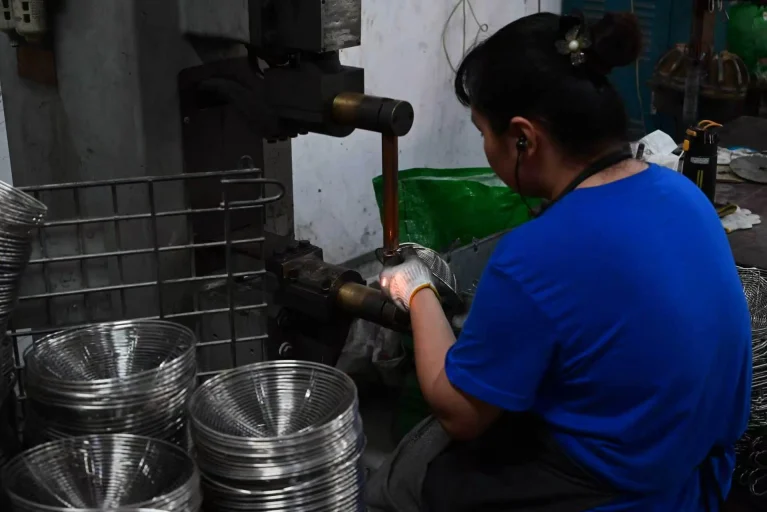
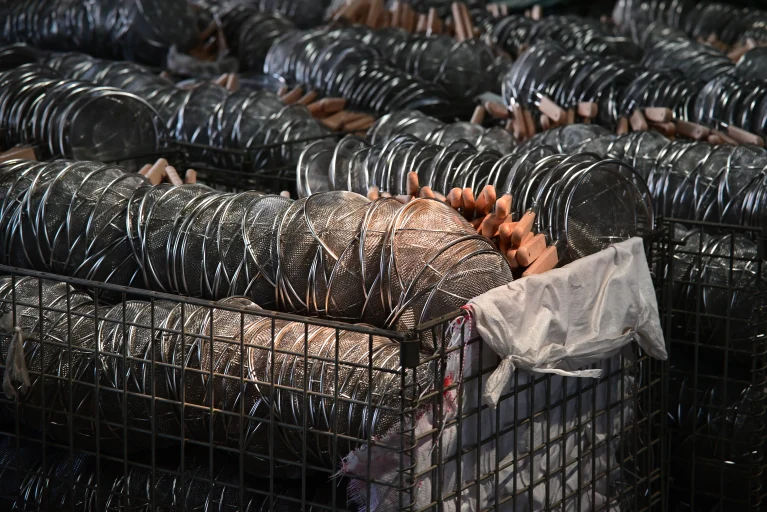
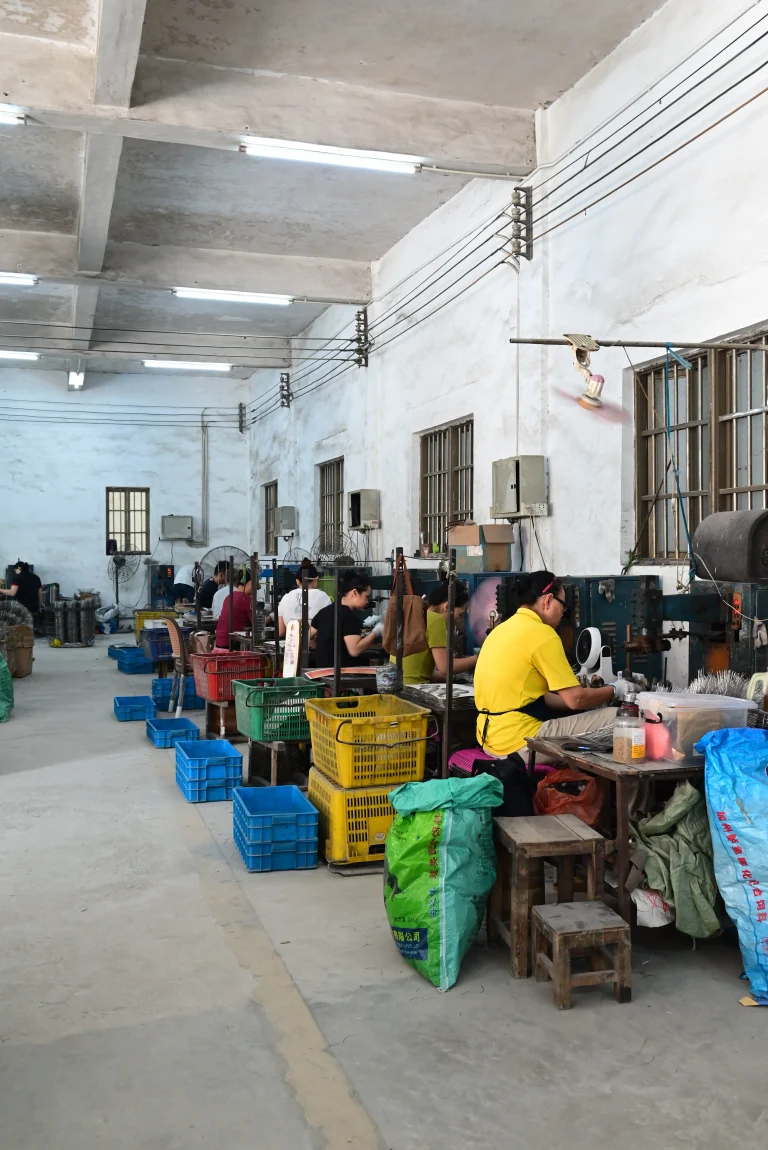
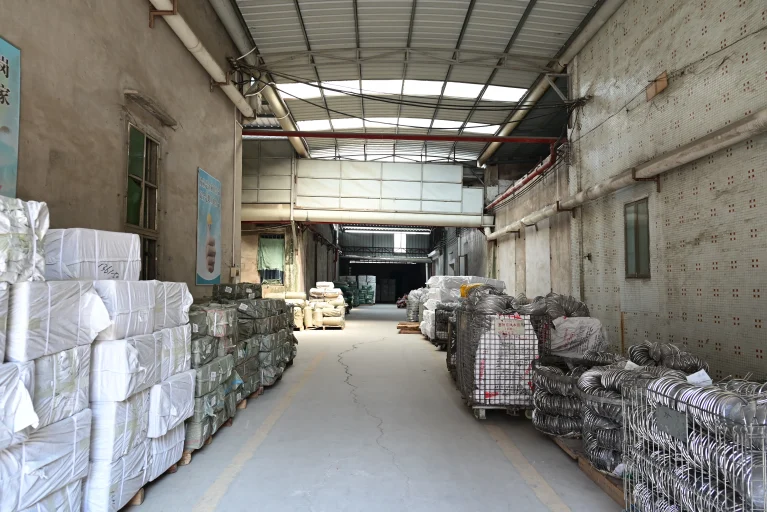
The factory photograph captures a production area filled with rows of stainless steel strainers featuring natural-colored wooden handles. The products are arranged in large groups, with circular metal baskets and extended handles positioned alongside one another.
Metalworking equipment and a storage cage containing additional strainer components can also be seen in the background.
This manufacturing scene highlights the combination of stainless steel basket construction and wooden handle components commonly found in kitchen strainers.
The repeated basket shapes and handle designs also illustrate the importance of dimensional consistency when producing similar kitchenware models in batches.
Why Wooden Handle Stainless Steel Strainers Remain Popular
Wooden handle stainless steel strainers combine the practical characteristics of metal kitchen utensils with the natural appearance of wood.
These products are commonly selected for household cooking, restaurant food preparation, and kitchenware retail collections.
Their popularity comes from several practical design advantages.
- Practical Stainless Steel Basket: The metal basket provides a useful structure for lifting and draining food ingredients.
- Natural Wooden Handle: Wooden grip components offer a traditional appearance and a comfortable handling surface.
- Versatile Kitchen Applications: Suitable designs can be used for draining noodles, vegetables, fried foods, and other ingredients.
- Multiple Basket Sizes: Different diameters provide options for household and commercial cooking requirements.
- Extended Handle Design: Longer handles can help users reach into deeper cooking vessels while maintaining a suitable working distance.
- Classic Kitchenware Appearance: The combination of stainless steel and wood creates a familiar and practical kitchen utensil design.
These characteristics make wooden handle strainers an important product category for kitchenware wholesalers and distributors.
Understanding the Structure of a Wooden Handle Stainless Steel Strainer
A wooden handle stainless steel strainer generally consists of several structural components. Each part contributes to the appearance, functionality, and handling characteristics of the finished product.
1. Stainless Steel Mesh Basket
The basket is the main functional component of a mesh strainer. Its metal mesh structure allows liquids to pass through while helping retain food ingredients.
The mesh opening size, basket depth, and overall diameter influence the product’s suitability for different filtering and draining tasks.
2. Circular Metal Frame
The circular frame supports the mesh basket and helps maintain its intended shape during normal kitchen use.
Proper frame construction is important because it provides structural support around the basket opening.
3. Metal Handle Shaft
The metal shaft connects the basket structure to the wooden grip. Its length and construction influence the overall dimensions and handling characteristics of the strainer.
Different product models may feature different shaft lengths or supporting structures according to their intended applications.
4. Wooden Handle Grip
The wooden grip provides the main contact surface for the user. Its shape, dimensions, surface finishing, and attachment method are important design considerations.
Wooden handles can also contribute to the visual appeal of kitchenware by introducing a natural material alongside the stainless steel structure.
5. Handle Connection Structure
The connection between the metal shaft and wooden grip must be suitable for the intended product design.
Manufacturers should pay attention to component alignment, attachment stability, and finishing details during assembly.
How Wooden Handle Stainless Steel Strainers Are Manufactured
Producing wooden handle stainless steel strainers involves several manufacturing stages. The exact process may vary according to product specifications, equipment, and structural design.
Step 1: Material Preparation
The manufacturing process begins with preparing the required stainless steel mesh, metal wire, frame components, handle shafts, and wooden grips.
Material specifications should be selected according to the intended product structure and purchasing requirements.
Step 2: Metal Basket Forming
Stainless steel mesh is shaped into the required basket configuration using suitable forming methods.
Accurate forming helps maintain the intended basket diameter, depth, and overall appearance.
Step 3: Frame and Support Assembly
The formed basket is combined with its supporting frame and any additional structural components required by the product design.
Careful positioning helps maintain basket alignment and contributes to consistent construction.
Step 4: Metal Component Joining
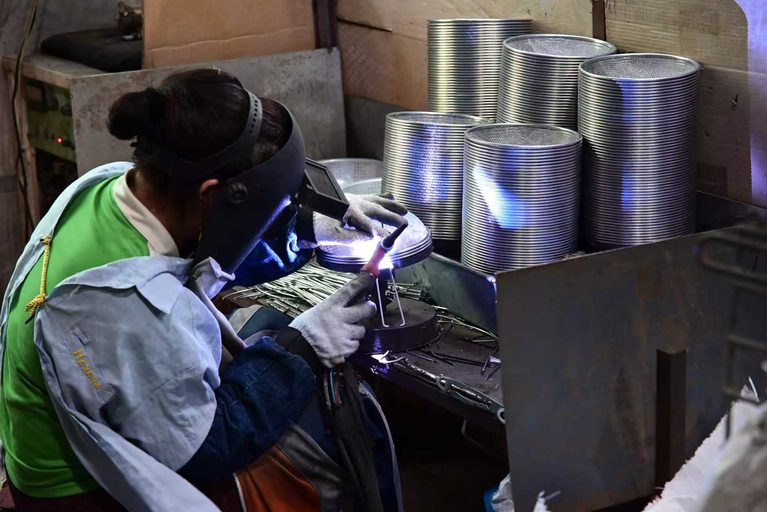
Selected metal components may be connected using appropriate welding or mechanical joining methods.
Properly formed connections help maintain the intended relationship between the basket, supporting frame, and handle shaft.
Step 5: Wooden Handle Installation
The wooden grip is attached to the metal handle structure according to the product design.
During this stage, manufacturers should pay attention to handle positioning, connection stability, and overall product alignment.
Step 6: Surface Finishing
Finishing operations help improve product appearance and address unwanted manufacturing marks, rough surfaces, or exposed sharp edges.
For wooden grips, suitable finishing helps provide a comfortable contact surface during normal handling.
Step 7: Product Inspection
Before products are prepared for distribution, relevant dimensions, structural connections, basket condition, and visible finishing details should be examined.
These checks help identify products that may require adjustment or additional processing.
The Importance of Handle Design in Kitchen Strainers
Although the basket performs the main draining and filtering function, the handle plays an equally important role in how conveniently a strainer can be used.
Handle length, grip dimensions, material selection, and attachment methods influence the overall handling characteristics of the utensil.
For wooden handle strainers, the grip provides a natural contact surface while the metal shaft connects it to the basket.
When selecting products for commercial cooking applications, buyers should consider whether the handle design provides suitable reach and control for the intended tasks.
Wood is a poor conductor of heat compared with stainless steel, but wooden handles should not be assumed to remain cool under every cooking condition. Handle temperature depends on product construction, exposure time, and operating conditions.
Wooden Handles vs. Stainless Steel Handles: Which Is Better?
Different handle materials offer different characteristics. The best choice depends on the intended kitchen application, maintenance requirements, and customer preferences.
| Feature | Wooden Handle Strainer | Stainless Steel Handle Strainer |
|---|---|---|
| Handle Material | Wooden grip with metal shaft | Metal handle structure |
| Appearance | Natural and traditional | Modern and metallic |
| Grip Characteristics | Natural wooden contact surface | Depends on metal handle shape and finish |
| Heat Transfer | Wood generally conducts heat more slowly than metal | Metal can transfer heat relatively quickly |
| Maintenance | Requires appropriate care to protect the wooden grip | Care depends on material grade and construction |
| Product Selection | Suitable for buyers seeking a classic handle design | Suitable for buyers preferring an all-metal appearance |
Both designs can serve practical kitchen functions when manufactured with suitable materials and structural specifications.
Bulk Manufacturing and Product Consistency
Wholesale kitchenware production often involves manufacturing multiple units of the same product model.
The photograph shows numerous wooden handle strainers arranged in long rows, illustrating the scale of product handling associated with batch manufacturing.
When producing similar utensils in quantity, consistency becomes an important consideration.
Products within the same specification should be evaluated for relevant dimensional and structural characteristics.
- Basket Diameter: Helps maintain consistency between products of the same model.
- Overall Length: Supports accurate product identification and comparison.
- Mesh Structure: Influences filtering performance and product appearance.
- Handle Dimensions: Contributes to consistent handling characteristics.
- Connection Alignment: Helps maintain the intended relationship between the basket and handle.
- Surface Appearance: Supports a more uniform presentation across products.
- Product Weight: Provides a useful reference for comparing specifications.
For international buyers, clear product specifications make it easier to evaluate different models and confirm purchasing requirements.
Quality Considerations for Wooden Handle Strainers
When evaluating wooden handle stainless steel strainers, buyers should pay attention to both the metal basket and wooden grip.
A practical product evaluation should consider the following areas.
Mesh and Basket Construction
Check the mesh for visible damage, uneven openings, loose edges, or unwanted deformation.
Metal Frame Alignment
Examine whether the basket frame maintains its intended circular shape and provides suitable support for the mesh.
Wooden Grip Surface
Review the wooden handle for rough surfaces, visible cracks, splinters, or other finishing defects.
Handle Connection
Evaluate the attachment between the wooden grip, metal shaft, and basket structure.
Product Dimensions
Confirm the overall length, basket diameter, and product weight according to the required specification.
Applications of Wooden Handle Stainless Steel Strainers
Wooden handle stainless steel strainers are suitable for a variety of cooking and food preparation tasks, depending on their basket structure and dimensions.
- Restaurant Kitchens: Useful for draining and transferring food ingredients during cooking.
- Noodle Preparation: Suitable models can help lift and drain cooked noodles.
- Vegetable Preparation: Practical for rinsing, blanching, and draining vegetables.
- Frying Applications: Appropriately specified models may be used for lifting food from cooking oil.
- Commercial Food Preparation: Different basket sizes provide options for various kitchen tasks.
- Household Cooking: Versatile kitchen utensils for everyday draining and filtering.
- Kitchenware Retail: A practical product category for household and restaurant supply collections.
For applications involving hot oil or high temperatures, buyers should confirm that the specific product and handle construction are suitable for the intended operating conditions.
Why Different Basket Sizes Matter
Kitchenware requirements vary according to cooking methods, food quantities, and the size of the cooking equipment being used.
Smaller strainers may be suitable for everyday household food preparation, while larger basket designs can accommodate greater quantities of ingredients.
For restaurant and commercial kitchen suppliers, offering multiple size options helps address different customer requirements.
When comparing product models, buyers should consider basket diameter, basket depth, overall length, handle material, and product weight.
What Wholesale Buyers Should Check Before Ordering
For international importers and kitchenware distributors, selecting the right supplier involves evaluating both product specifications and purchasing arrangements.
Before placing a bulk order for wooden handle stainless steel strainers, buyers should confirm the following details.
- Product Model: Confirm the exact item number and product description.
- Basket Dimensions: Verify the required basket diameter and overall length.
- Material Specifications: Confirm the stainless steel grade and wooden handle material.
- Mesh Structure: Review mesh fineness and basket construction.
- Handle Design: Check the grip shape, handle length, and attachment method.
- Product Weight: Confirm the weight of each size or model.
- Sample Evaluation: Request samples when necessary to examine product construction.
- Order Quantity: Provide the required purchasing quantity for each specification.
- Packaging Requirements: Discuss suitable packing arrangements for transportation.
- Production Schedule: Confirm estimated lead times based on the requested models and quantities.
Clear communication regarding these details helps buyers make informed purchasing decisions and prepare more accurate wholesale inquiries.
HEQIA HARDWARE: Stainless Steel Kitchenware for Wholesale Buyers
At HEQIA HARDWARE, we focus on practical stainless steel kitchenware products for household and commercial cooking applications.
Our product collection includes stainless steel wire skimmers, mesh strainers, four-wire strainers, double-fork strainers, austenitic stainless steel strainer models, and kitchenware sets.
Different basket structures, product dimensions, and handle materials provide purchasing options for kitchenware retailers, restaurant equipment suppliers, distributors, and international wholesale buyers.
We understand the importance of clear product information when sourcing kitchen utensils. Product names, item numbers, dimensions, and weight specifications help customers compare models and identify suitable products for their target markets.
Whether you are looking for wooden handle mesh strainers or other stainless steel kitchenware products, contact HEQIA HARDWARE to discuss your purchasing requirements.
Frequently Asked Questions
1. What is a wooden handle stainless steel strainer?
A wooden handle stainless steel strainer is a kitchen utensil that combines a metal straining basket with a wooden grip. It is designed for draining, filtering, or lifting food ingredients, depending on the product structure.
2. What are the advantages of wooden handles?
Wooden handles provide a natural appearance and a practical gripping surface. Wood generally transfers heat more slowly than metal, although actual handle temperature depends on the product design and cooking conditions.
3. Are wooden handle strainers suitable for restaurant kitchens?
Yes. Suitable wooden handle strainers can be used for various restaurant food preparation tasks. Buyers should select appropriate dimensions and materials according to the intended application.
4. What should buyers inspect when evaluating wooden handle strainers?
Important considerations include mesh condition, basket alignment, handle stability, wooden grip finishing, product dimensions, and overall construction.
5. How should wooden handle strainers be maintained?
Wooden grips should be cleaned and dried appropriately. Avoid prolonged soaking and follow the product’s care instructions to help preserve the handle condition.
6. Why are multiple strainer sizes important for wholesale buyers?
Different sizes allow distributors to serve household customers, restaurants, and commercial kitchens with varying food preparation requirements.
7. What kitchenware products does HEQIA HARDWARE offer?
HEQIA HARDWARE offers stainless steel wire skimmers, mesh strainers, four-wire strainers, double-fork strainers, austenitic stainless steel strainer models, and other kitchenware products.
8. How can international buyers request a wholesale quotation?
Please contact HEQIA HARDWARE with your preferred product name, item number, size, required quantity, and any relevant packaging requirements to request additional product information and wholesale purchasing details.
Discover Wooden Handle Stainless Steel Strainers from HEQIA HARDWARE
From stainless steel basket forming to wooden handle assembly, the manufacturing of kitchen strainers involves multiple structural and production considerations.
The combination of metal mesh construction, practical handle design, and different size options makes wooden handle strainers a useful category for kitchenware distributors and commercial kitchen suppliers.
Explore the HEQIA HARDWARE stainless steel kitchenware collection and contact us to learn more about available models, product specifications, and wholesale purchasing opportunities.
HEQIA HARDWARE – Stainless Steel Strainers & Kitchenware Manufacturer