Stainless Steel Mesh Strainer Manufacturing & Wholesale | HEQIA
HEQIA HARDWARE · MANUFACTURING INSIGHTS & STAINLESS STEEL KITCHENWARE
From Fine Mesh to Finished Kitchenware: The Manufacturing and Wholesale Value of Stainless Steel Mesh Strainers
In professional kitchens, even the simplest tools can make a significant difference in everyday cooking efficiency. Stainless steel mesh strainers are among the most widely used kitchen utensils, providing practical solutions for draining, filtering, rinsing, and transferring food ingredients.
Behind these functional kitchen tools lies a manufacturing process that involves material preparation, mesh forming, structural assembly, and careful attention to product details.
At HEQIA HARDWARE, our stainless steel kitchenware collection includes a variety of mesh strainers and wire skimmers designed for different cooking applications. Through multiple product specifications and practical structural designs, we aim to provide suitable kitchenware options for international wholesalers, distributors, and commercial kitchen suppliers.
In this article, we explore the manufacturing characteristics, functional advantages, and wholesale purchasing considerations of stainless steel mesh strainers.
A Closer Look at Stainless Steel Mesh Strainer Production
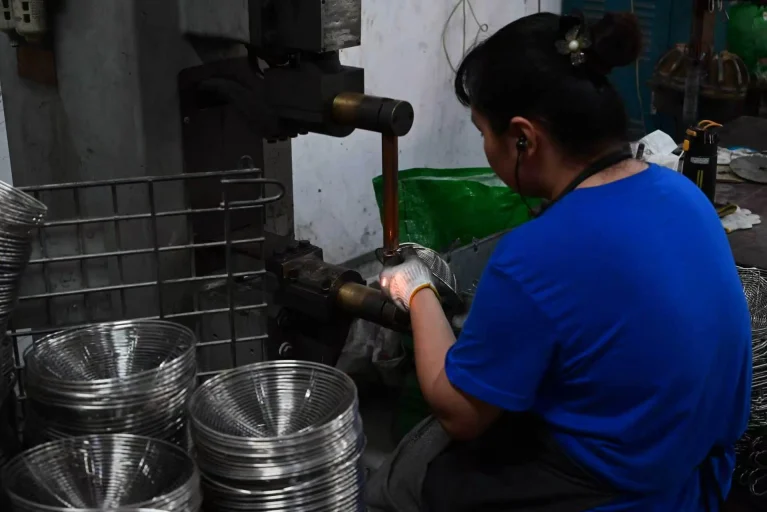
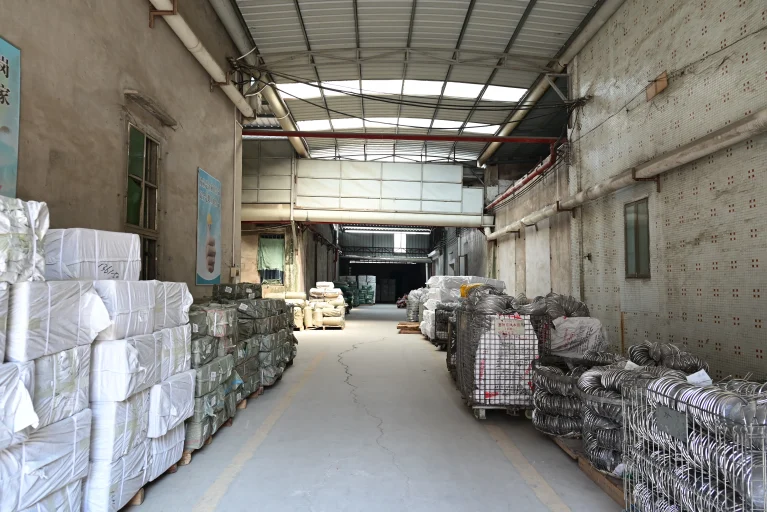
The manufacturing photograph shows large quantities of circular stainless steel mesh strainers arranged in metal storage cages. Their fine mesh surfaces, reinforced circular frames, and handle components illustrate the structural features commonly found in kitchen filtering utensils.
These products demonstrate how stainless steel mesh and supporting metal structures are combined to create practical kitchen tools suitable for draining and filtering food ingredients.
Unlike traditional open-wire skimmers, mesh strainers feature smaller openings that help retain smaller food particles while allowing water and other liquids to pass through.
This functional difference makes mesh strainers particularly useful for a wide range of food preparation tasks.
Why Stainless Steel Mesh Strainers Are Essential Kitchen Tools
Stainless steel mesh strainers are valued for their versatility, practical construction, and suitability for different kitchen environments.
Whether used in household kitchens, restaurants, catering facilities, or commercial food preparation areas, these utensils help improve convenience during draining and filtering operations.
- Efficient Draining: Fine mesh openings allow liquids to pass through while helping retain food ingredients.
- Practical Filtering: Suitable for separating small food particles from water, cooking liquids, and other ingredients.
- Versatile Applications: Useful for rinsing vegetables, draining noodles, filtering cooking liquids, and general food preparation.
- Stainless Steel Construction: Metal mesh and supporting frames provide a practical structure for repeated kitchen use.
- Multiple Size Options: Different basket diameters accommodate various cooking requirements.
- Convenient Handling: Available handle designs provide options for different kitchen tasks.
These characteristics make stainless steel mesh strainers an important category in both household kitchenware collections and commercial kitchen equipment ranges.
Understanding the Structure of a Stainless Steel Mesh Strainer
A stainless steel mesh strainer generally consists of several important structural components. Each component contributes to the functionality, appearance, and usability of the finished utensil.
1. Fine Stainless Steel Mesh
The mesh surface is the primary filtering component of the strainer. Its small openings allow liquids to drain while helping retain food particles and ingredients.
Different mesh specifications can influence drainage speed and filtering performance. Buyers should therefore consider the intended application when selecting mesh strainers.
2. Reinforced Circular Frame
The circular metal frame supports the mesh basket and helps maintain its intended shape.
Proper frame construction is important because the rim provides structural support during lifting, draining, and handling.
3. Basket Support Structure
Depending on the product design, additional metal supports may be incorporated into the basket structure.
These supports help maintain the intended basket shape and provide additional structural stability during normal kitchen operations.
4. Handle Connection
The connection between the basket and handle is another important structural detail.
Different kitchen strainers may feature stainless steel handles, tubular handles, wooden handles, bamboo handles, or other handle designs.
Handle length, grip structure, and connection design should be selected according to the intended kitchen application.
How Stainless Steel Mesh Strainers Are Manufactured
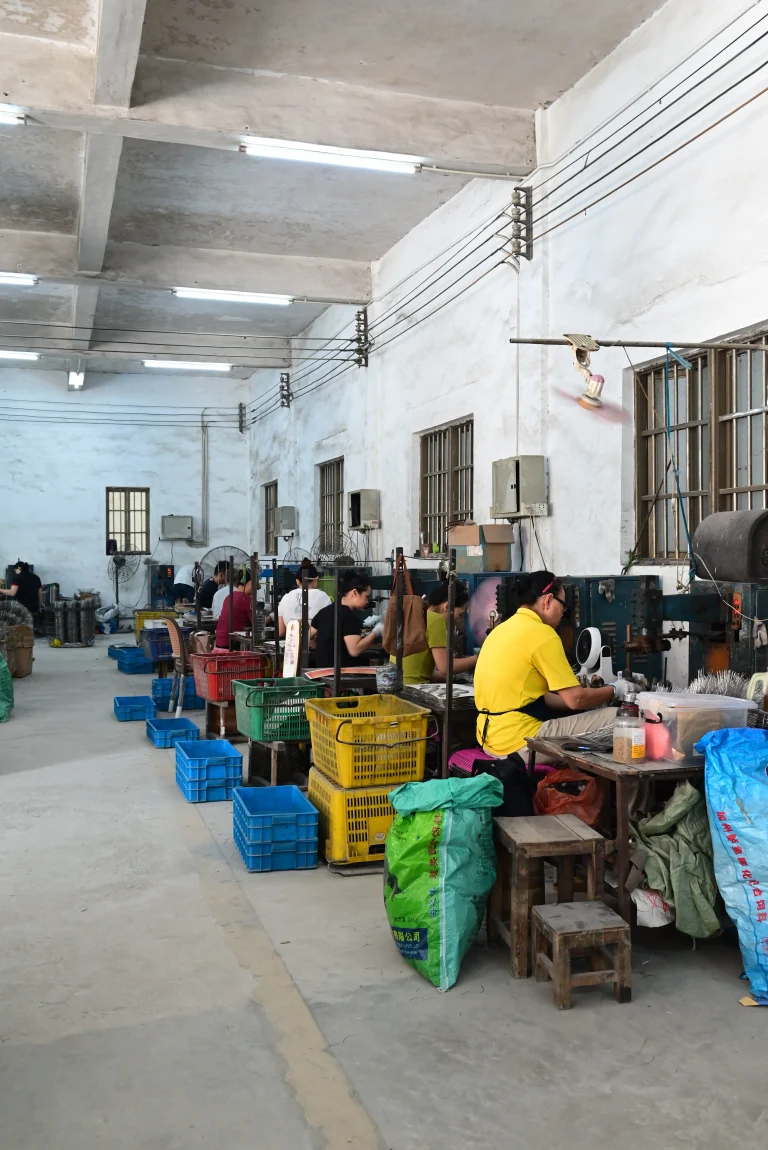
The production of stainless steel mesh strainers generally involves several manufacturing stages. Although specific procedures vary according to product design and factory equipment, the following steps are commonly involved.
Material Preparation
Manufacturing begins with preparing the stainless steel mesh, metal frames, support wires, and handle components required for each product model.
Material specifications should be selected according to the intended product structure and market requirements.
Mesh Cutting and Basket Forming
The metal mesh is cut and shaped into the required basket configuration.
Accurate forming helps maintain consistent basket dimensions and provides the foundation for subsequent assembly operations.
Frame Assembly
The formed mesh is connected to its supporting frame. Depending on the design, additional structural wires may be incorporated to help maintain basket shape.
Careful positioning during assembly contributes to consistent product appearance and structural alignment.
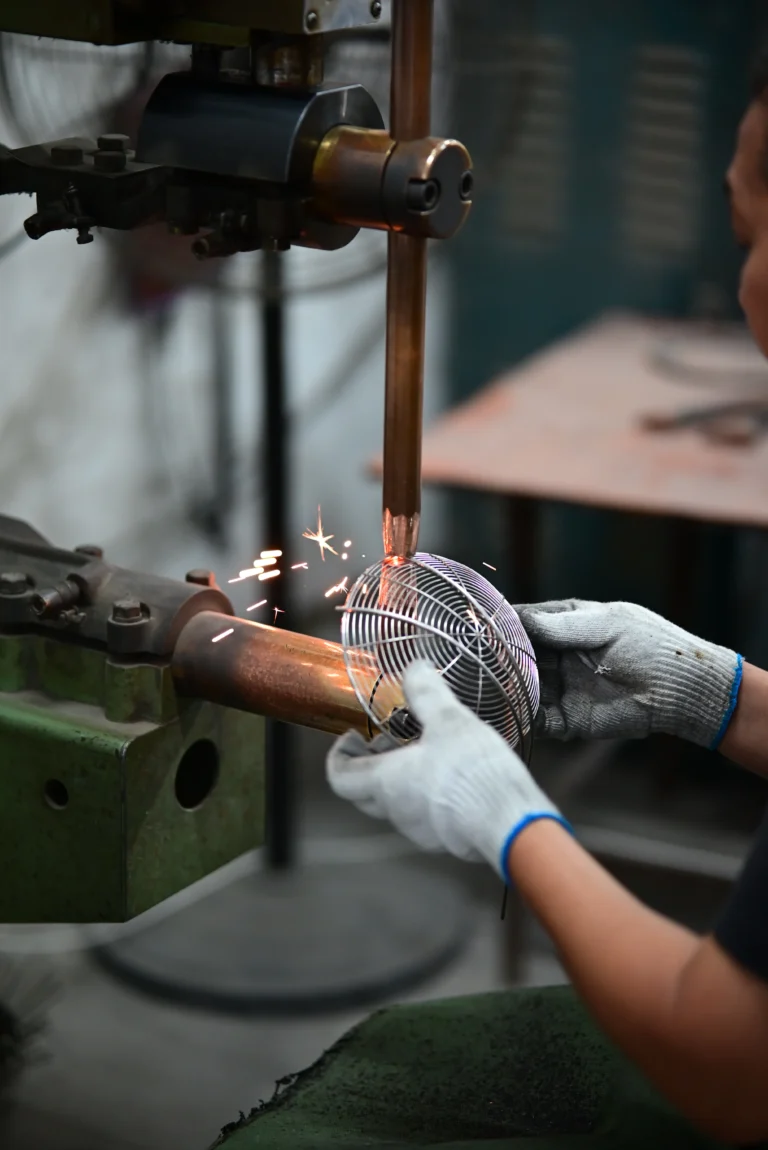
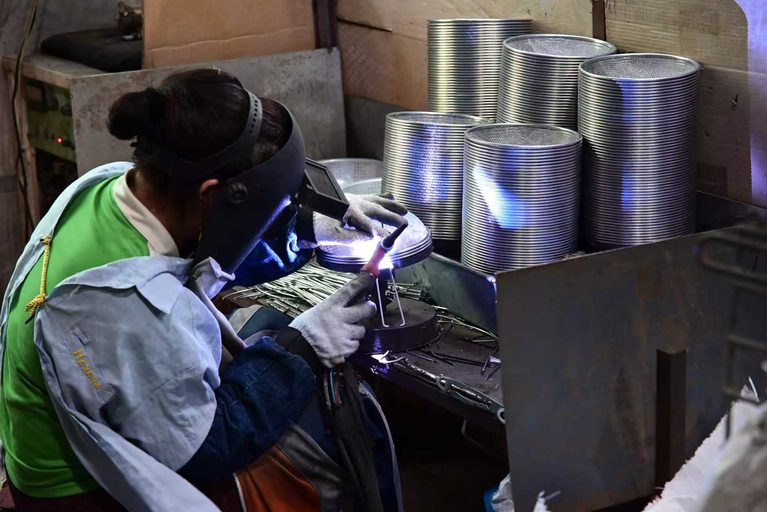
Welding and Component Joining
Selected metal components may be joined using suitable welding or mechanical assembly methods.
Properly formed connections help maintain the intended relationship between the mesh basket, supporting frame, and handle structure.
Surface Finishing
Finishing operations help improve product appearance and address unwanted manufacturing marks or sharp edges.
Appropriate finishing is especially important for kitchen utensils that are frequently handled during cooking and cleaning.
Product Inspection
Before products are prepared for distribution, manufacturers should examine relevant specifications and visible construction details.
Typical inspection considerations include basket dimensions, mesh condition, frame alignment, handle connections, and overall product appearance.
Fine Mesh vs. Open-Wire Skimmers: What Is the Difference?
Although stainless steel mesh strainers and wire skimmers share similar kitchen applications, their basket structures are designed for different filtering requirements.
| Feature | Stainless Steel Mesh Strainer | Stainless Steel Wire Skimmer |
|---|---|---|
| Basket Structure | Fine metal mesh | Open-wire construction |
| Opening Size | Generally smaller openings | Generally wider openings |
| Main Function | Filtering and draining smaller ingredients | Lifting and draining larger ingredients |
| Typical Applications | Vegetables, noodles, food particles, cooking liquids | Fried foods, vegetables, larger cooked ingredients |
| Drainage Characteristics | Depends on mesh density and liquid properties | Generally allows rapid drainage through wider openings |
| Product Selection | Based on mesh fineness, basket size, and handle design | Based on wire spacing, basket size, and handle design |
For kitchenware distributors, offering both product categories provides customers with more options for different cooking and food preparation requirements.
The Importance of Consistent Mesh Quality
Mesh quality is an important consideration when evaluating stainless steel strainers.
The arrangement of metal wires influences the filtering characteristics and appearance of the finished basket.
Uneven mesh openings, damaged wires, or poorly secured edges can affect product usability and appearance.
For wholesale buyers, reviewing mesh consistency is therefore an important part of product evaluation.
- Mesh Uniformity: Check whether the openings are reasonably consistent across the basket.
- Wire Condition: Examine the mesh for visible damage or broken wires.
- Basket Shape: Verify that the basket maintains its intended dimensions and form.
- Frame Connection: Inspect the relationship between the mesh and supporting rim.
- Surface Finishing: Look for exposed sharp edges or unwanted manufacturing burrs.
- Handle Stability: Evaluate the connection between the handle and basket.
These considerations help buyers compare products and identify suitable kitchenware for their intended markets.
Bulk Production and Storage of Stainless Steel Mesh Strainers
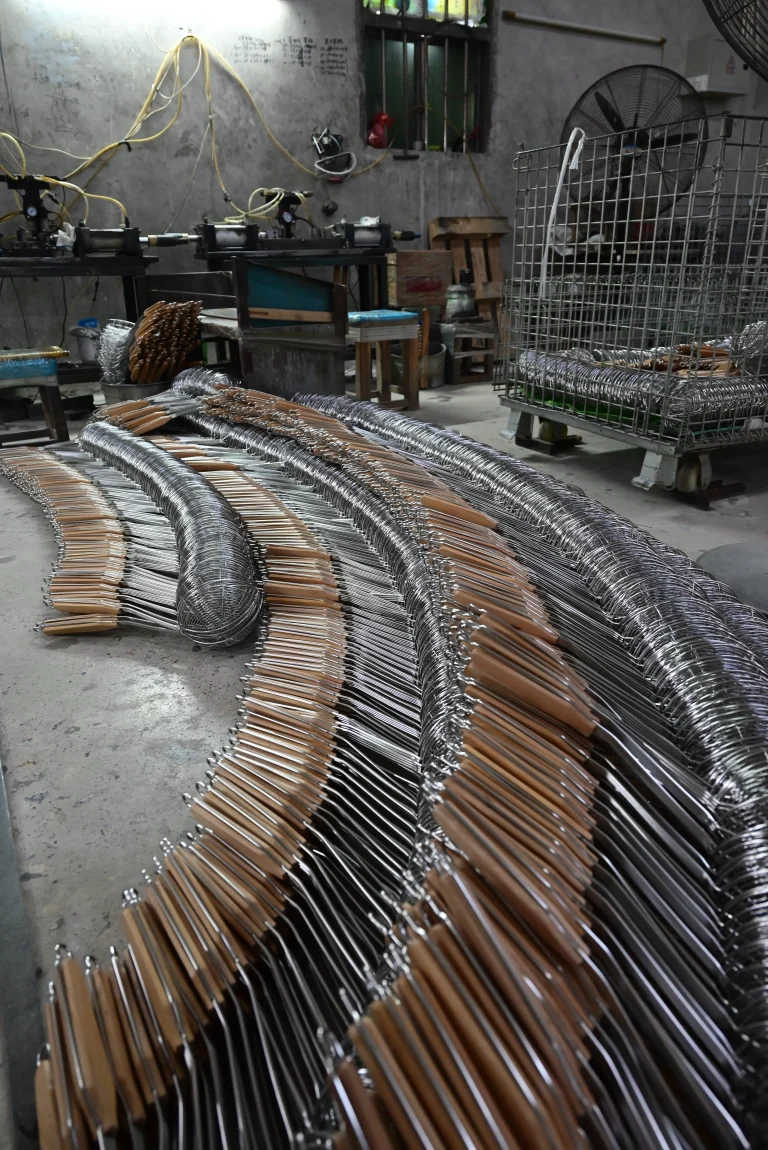
Wholesale kitchenware manufacturing often involves producing multiple units of similar products within planned production batches.
The photograph shows numerous mesh strainer baskets arranged together in metal storage cages. This type of storage scene illustrates how large quantities of kitchenware components or products may be grouped during manufacturing and inventory handling.
Batch production requires attention to product identification, size variations, material specifications, and manufacturing progress.
Properly distinguishing semi-finished components from completed products is also important because different items may require additional assembly, finishing, inspection, or packaging before shipment.
For international buyers, understanding the difference between production quantities and shipment-ready inventory can help establish realistic purchasing expectations.
Why Multiple Size Options Matter for Wholesale Buyers
Kitchenware requirements vary between households, restaurants, catering operations, and commercial food preparation environments.
Smaller mesh strainers may be suitable for everyday kitchen tasks, while larger baskets can accommodate greater quantities of food ingredients.
Handle length is another important consideration, particularly when utensils are used with deep cooking vessels or larger kitchen equipment.
For wholesale distributors, offering several sizes within the same product series can help serve different customer groups and market segments.
When comparing product specifications, buyers should review the overall dimensions, basket diameter, product weight, handle material, and intended application.
Stainless Steel Mesh Strainers for Different Kitchen Applications
The practical design of stainless steel mesh strainers makes them suitable for a variety of kitchen activities.
- Restaurant Kitchens: Useful for draining ingredients during daily food preparation.
- Commercial Food Preparation: Suitable for handling ingredients in different cooking processes.
- Vegetable Washing: Helps rinse and drain vegetables and other food ingredients.
- Noodle Preparation: Convenient for lifting and draining noodles or similar foods.
- Cooking Liquid Filtering: Helps separate suitable food particles from liquids.
- Catering Services: Practical for repeated draining and filtering tasks.
- Household Kitchens: Versatile utensils for everyday cooking and food preparation.
Buyers should select the appropriate mesh fineness, basket dimensions, and handle design according to the intended use.
What International Buyers Should Consider Before Ordering
When sourcing stainless steel mesh strainers for wholesale distribution, evaluating product specifications is essential.
Different suppliers may offer products that appear similar but differ in material grade, mesh structure, dimensions, weight, and finishing quality.
Before placing a bulk order, buyers should consider the following factors:
- Stainless Steel Grade: Confirm the material specifications required for the intended market.
- Mesh Fineness: Select a suitable mesh structure for the intended filtering application.
- Basket Dimensions: Verify basket diameter, depth, and overall product size.
- Handle Material: Compare stainless steel, wooden, bamboo, and other available handle designs.
- Product Weight: Review the weight of each specification for product comparison and logistics planning.
- Structural Connections: Examine the basket frame and handle assembly.
- Surface Finishing: Check for visible manufacturing defects and exposed sharp edges.
- Sample Evaluation: Request samples when necessary to examine product quality before bulk purchasing.
- Packaging Requirements: Confirm packing methods according to order quantities and shipping arrangements.
Clear communication regarding these details helps buyers select products that match their business requirements.
HEQIA HARDWARE: Stainless Steel Kitchenware for Global Wholesale Markets
At HEQIA HARDWARE, we focus on providing practical stainless steel kitchenware products for different cooking and food preparation applications.
Our kitchenware collection includes stainless steel wire skimmers, four-wire strainers, double-fork strainers, stainless steel mesh strainers, austenitic stainless steel strainer models, and kitchenware sets.
Different basket structures, handle materials, and product dimensions provide flexible options for retailers, distributors, restaurant suppliers, and international wholesale buyers.
We understand that successful kitchenware sourcing depends on accurate product information and clear purchasing requirements.
Our product listings provide model numbers, dimensions, weights, and available specifications to help buyers compare products and identify suitable kitchenware options.
Contact HEQIA HARDWARE to learn more about our stainless steel mesh strainer collection and available wholesale purchasing options.
Frequently Asked Questions
1. What is a stainless steel mesh strainer?
A stainless steel mesh strainer is a kitchen utensil featuring a metal mesh basket designed to allow liquids to drain while helping retain food ingredients and smaller particles.
2. What is the difference between a mesh strainer and a wire skimmer?
Mesh strainers generally feature smaller openings for filtering and draining finer ingredients, while wire skimmers typically use wider openings for lifting and draining larger foods.
3. Why is mesh quality important?
Mesh quality influences filtering performance, product appearance, and usability. Consistent openings and properly secured mesh structures are important considerations.
4. Are stainless steel mesh strainers suitable for commercial kitchens?
Yes. Stainless steel mesh strainers are commonly used in restaurants, catering operations, and commercial kitchens for draining and filtering food ingredients. Suitable specifications should be selected for each application.
5. What should buyers inspect before placing a bulk order?
Buyers should review material specifications, mesh consistency, basket dimensions, handle construction, product weight, and surface finishing.
6. Does HEQIA HARDWARE offer different kitchen strainer designs?
HEQIA HARDWARE offers stainless steel mesh strainers, wire skimmers, four-wire strainers, double-fork strainers, and other kitchenware products in various specifications.
7. How can wholesale buyers request product information?
Please contact HEQIA HARDWARE with your preferred product name, item number, size, and required quantity to request additional specifications and wholesale purchasing information.
Explore Our Stainless Steel Mesh Strainer Collection
From fine mesh construction to practical basket designs, stainless steel mesh strainers play an important role in everyday kitchen operations.
Understanding their manufacturing characteristics, structural features, and product specifications helps buyers make more informed purchasing decisions.
Explore the HEQIA HARDWARE kitchenware collection to discover stainless steel mesh strainers, wire skimmers, and other practical kitchen utensils for your business.
HEQIA HARDWARE – Stainless Steel Strainers & Kitchenware Manufacturer