Precision Welding in Stainless Steel Wire Skimmer Manufacturing | HEQIA
HEQIA HARDWARE · FACTORY INSIGHTS & MANUFACTURING
Precision in Every Connection: Inside the Stainless Steel Wire Skimmer Welding Process
Behind every stainless steel wire skimmer is a series of manufacturing steps that transform individual metal components into a practical kitchen utensil. While the finished product may appear simple, its construction requires careful wire forming, accurate positioning, structural joining, and attention to detail.
At HEQIA HARDWARE, we recognize the importance of manufacturing workmanship in producing stainless steel kitchenware. From circular wire baskets to reinforced handle connections, each component contributes to the functionality and overall structure of the finished product.
In this article, we explore the welding and assembly processes involved in stainless steel wire skimmer manufacturing, highlighting the role of skilled operators, specialized equipment, and careful production practices.
A Closer Look at Stainless Steel Wire Basket Welding
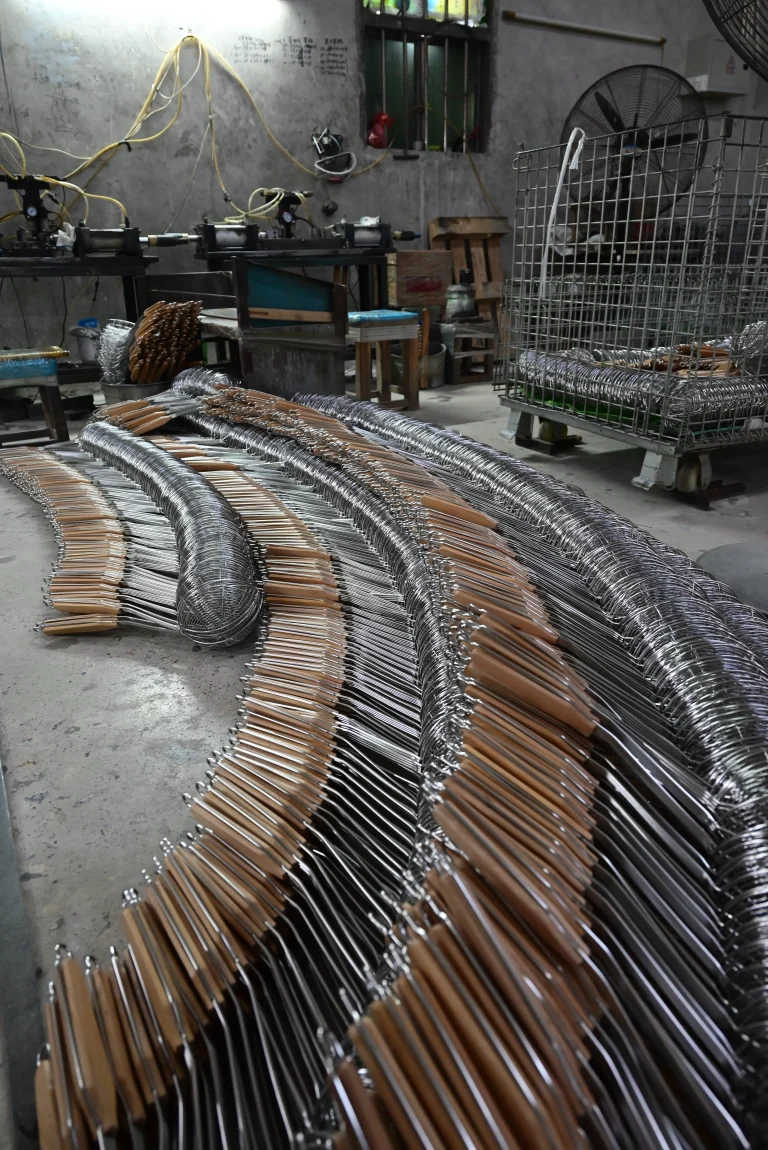
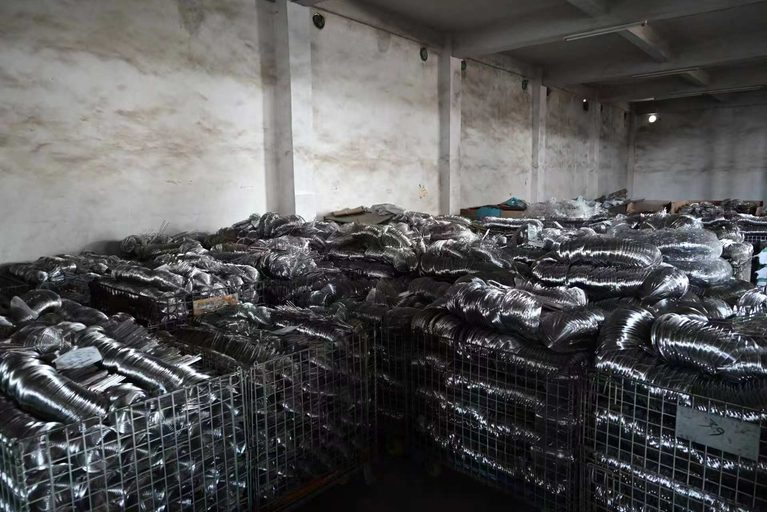
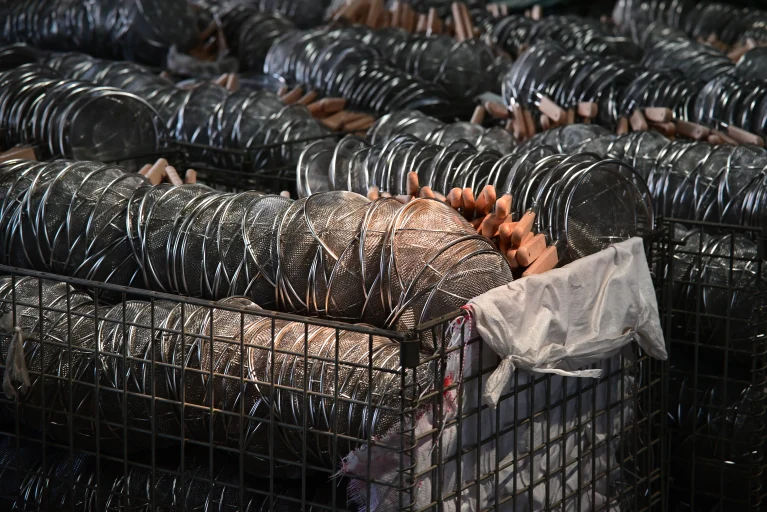
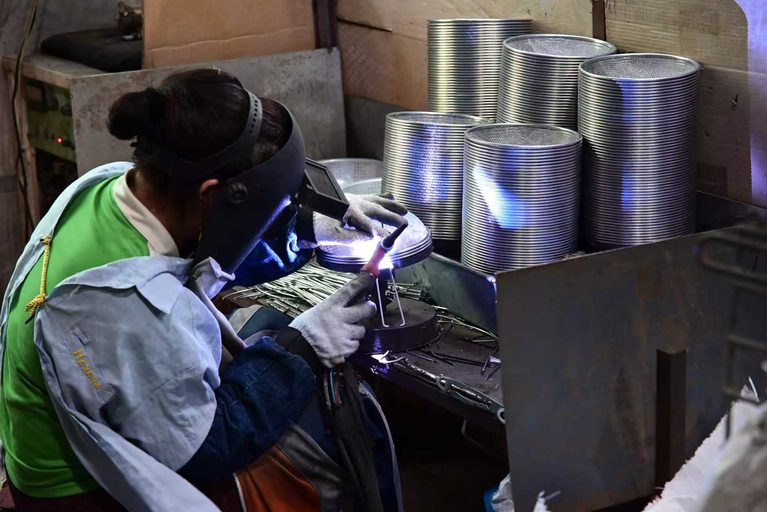
The manufacturing photograph captures an operator working with a metal wire basket at a welding station. The operator carefully positions the basket against the equipment, while stacks of formed stainless steel wire baskets are arranged nearby for subsequent production operations.
This scene illustrates an important stage in kitchenware manufacturing: joining metal components to create a functional and stable structure.
For stainless steel wire skimmers, the basket is one of the most important components. Its circular shape and wire arrangement determine how effectively the utensil supports food while allowing water or cooking oil to drain.
Accurate positioning during welding helps maintain the intended basket structure and contributes to consistency between finished products.
Why Welding Matters in Kitchenware Manufacturing
Welding is widely used in metal kitchenware production because it provides a practical method for connecting stainless steel components.
In wire skimmer manufacturing, welding may be used to secure individual wires, connect structural supports, or join basket components to their supporting frames.
The quality of these connections influences several important product characteristics.
- Structural Integrity: Properly formed connections help maintain the stability of the wire basket during normal use.
- Product Consistency: Accurate joining positions support more uniform construction across products of the same specification.
- Basket Alignment: Careful component positioning helps preserve the intended circular shape and wire arrangement.
- Surface Appearance: Controlled joining and appropriate finishing contribute to a cleaner product appearance.
- Practical Durability: Well-formed joints help support the overall construction of stainless steel kitchen utensils.
For manufacturers and wholesale buyers alike, these details are important considerations when evaluating stainless steel kitchenware.
The Role of Skilled Operators in Production
Manufacturing equipment provides the mechanical functions required for metal forming and joining, but skilled operators remain an essential part of many production processes.
During wire basket welding, operators must carefully handle the workpiece, position components, and coordinate their movements with the equipment.
Even when similar products are manufactured repeatedly, attention to component placement is important. Small differences in positioning can affect the appearance and alignment of the finished basket.
The photograph demonstrates the hands-on nature of this process, with the operator working directly at the welding station while multiple formed baskets are prepared nearby.
This combination of equipment-assisted production and manual handling is common in the manufacture of metal kitchen utensils.
From Metal Wire to a Finished Skimmer Basket
Producing a stainless steel wire skimmer involves more than joining a few metal components. The manufacturing process generally includes several interconnected stages, each contributing to the finished utensil.
1. Stainless Steel Wire Preparation
The process begins with preparing stainless steel wire and other required components according to the intended product design.
Wire dimensions, material specifications, and component consistency are important considerations because they influence the final basket structure.
2. Circular Basket Forming
Metal wires are shaped and arranged to create the required basket structure. Depending on the product model, the basket may feature concentric circular wires, radial supports, or other open-wire configurations.
Accurate forming helps maintain the intended dimensions and supports a consistent appearance across products of the same size.
3. Component Positioning
Before joining, individual metal components must be positioned according to the product structure.
Proper positioning helps maintain basket symmetry and ensures that joining points are located where they are required.
4. Welding and Structural Joining
Specialized welding equipment is used to join selected metal components. During this stage, careful alignment and controlled operation are important for achieving consistent connections.
For wire baskets, welding helps secure the structural arrangement and prepare the basket for subsequent assembly or finishing operations.
5. Handle Assembly
Depending on the product design, the finished basket may be connected to a stainless steel handle, tubular handle, wooden handle, bamboo handle, or another suitable handle structure.
Handle length, connection design, and overall product balance are important factors in determining how conveniently the skimmer can be used during cooking.
6. Finishing and Product Inspection
After structural assembly, appropriate finishing and inspection procedures help identify visible defects and confirm relevant product specifications.
Manufacturers should pay attention to basket alignment, exposed edges, joining points, dimensions, and overall appearance before products are prepared for distribution.
The Importance of Consistent Wire Basket Construction
Stainless steel wire skimmers are designed to lift food while allowing liquids to pass through the basket. To perform this function effectively, the wire arrangement must provide a suitable balance between support and drainage.
Consistent spacing between wires helps maintain predictable drainage characteristics. A properly formed basket also provides a practical structure for handling food during frying, boiling, and general kitchen preparation.
For wholesale buyers purchasing multiple sizes or product models, consistency in basket construction is particularly important.
Products with clearly defined dimensions, stable structural designs, and consistent appearance are easier to evaluate, compare, and incorporate into kitchenware collections.
Why Stainless Steel Wire Skimmers Are Popular Kitchen Tools
Stainless steel wire skimmers are widely used because of their practical design and versatility.
Unlike fine mesh strainers, which are designed to retain smaller food particles, open-wire skimmers typically feature wider openings that allow cooking liquids to drain quickly.
This makes them particularly suitable for handling larger food ingredients during frying, boiling, and food preparation.
- Frying: Convenient for lifting fried foods and allowing excess cooking oil to drain.
- Boiling: Suitable for removing larger ingredients from boiling water.
- Vegetable Preparation: Useful for lifting and draining cooked or blanched vegetables.
- Restaurant Kitchens: Practical for common food preparation and cooking operations.
- Commercial Food Preparation: Available in different sizes to accommodate various kitchen requirements.
Manufacturing Different Wire Skimmer Designs
Not all stainless steel wire skimmers are constructed in the same way. Different cooking applications require different basket sizes, handle structures, and support designs.
HEQIA HARDWARE offers a selection of kitchen strainers and skimmers with various specifications to meet different purchasing requirements.
- Traditional Stainless Steel Wire Skimmers: Practical open-wire basket designs for everyday draining applications.
- Four-Wire Skimmers: Wire skimmer models featuring additional structural wire arrangements.
- Double-Fork Skimmers: Designs incorporating two-pronged support connections.
- Stainless Steel Mesh Strainers: Fine mesh structures for filtering and draining smaller ingredients.
- Bakelite Handle Skimmers: Stainless steel baskets combined with practical Bakelite handles.
- Bamboo Handle Skimmers: Large basket designs with extended bamboo handles for food preparation.
By offering different basket structures and handle options, kitchenware suppliers can provide buyers with greater flexibility when selecting products for their target markets.
What Wholesale Buyers Should Check Before Ordering
For international importers, wholesalers, and kitchenware distributors, understanding product construction is an important part of supplier evaluation.
When purchasing stainless steel wire skimmers, buyers should consider several factors beyond the product’s appearance.
- Material Specifications: Confirm the stainless steel grade and material requirements for the intended application.
- Welding Quality: Examine the appearance and consistency of welded connections.
- Basket Dimensions: Check the basket diameter, overall length, and product weight.
- Wire Arrangement: Review the spacing and structure of the metal wires.
- Handle Construction: Evaluate handle material, length, and connection design.
- Surface Finishing: Inspect exposed edges, visible burrs, and other finishing details.
- Product Samples: Request samples when necessary to evaluate the actual product before placing a bulk order.
- Order Specifications: Confirm item numbers, required quantities, and packaging requirements with the supplier.
Careful evaluation of these details helps buyers select kitchenware products that better match their business needs and customer expectations.
Manufacturing Workmanship and Product Quality
In stainless steel kitchenware manufacturing, quality is influenced by a combination of material selection, product design, equipment operation, and assembly workmanship.
For wire skimmers, the precision of the basket structure and the consistency of metal connections are especially important.
Careful manufacturing practices help support products that maintain their intended dimensions and structural appearance.
The welding process shown in the photograph highlights how individual components are handled during production. It also illustrates why attention to positioning and joining remains an important part of metal kitchenware manufacturing.
HEQIA HARDWARE: Stainless Steel Kitchenware for Wholesale Buyers
At HEQIA HARDWARE, we focus on providing practical stainless steel kitchenware products for a variety of cooking and food preparation applications.
Our collection includes stainless steel wire skimmers, four-wire strainers, double-fork strainers, mesh skimmers, austenitic stainless steel strainer models, and kitchenware sets.
Different product dimensions, handle materials, and basket designs provide options for kitchenware retailers, distributors, restaurant suppliers, and international wholesale buyers.
We understand the importance of clear product information when sourcing kitchen utensils. Detailed specifications, model numbers, and available size options help buyers compare products and identify suitable solutions for their purchasing requirements.
Frequently Asked Questions
1. Why is welding important in stainless steel wire skimmer production?
Welding connects metal components and helps maintain the intended structure of the wire basket. Properly formed joints contribute to the overall integrity of the finished kitchen utensil.
2. What is the purpose of the circular wire basket?
The circular wire basket supports food during lifting while allowing cooking oil, water, and other liquids to drain through its openings.
3. What is the difference between a wire skimmer and a mesh skimmer?
A wire skimmer generally features wider openings for efficient drainage of larger ingredients, while a mesh skimmer uses a finer structure to help retain smaller food particles.
4. What should buyers inspect when evaluating welded wire skimmers?
Buyers should check basket alignment, welding connections, wire spacing, handle construction, product dimensions, and surface finishing.
5. Are stainless steel wire skimmers suitable for commercial kitchens?
Yes. Stainless steel wire skimmers are commonly used for frying, draining, and transferring food in restaurants and commercial food preparation environments. Buyers should select suitable sizes and specifications for their intended applications.
6. What types of stainless steel strainers does HEQIA HARDWARE offer?
Our collection includes traditional wire skimmers, four-wire strainers, double-fork strainers, stainless steel mesh strainers, and other kitchenware products in various sizes and handle designs.
7. How can wholesale buyers request product information?
Please contact HEQIA HARDWARE with your preferred product name, item number, size, and required quantity to request additional specifications and wholesale purchasing information.
Discover the Craftsmanship Behind Everyday Kitchenware
From carefully formed stainless steel wires to precisely positioned basket components, the manufacturing of kitchen skimmers involves many important details.
The combination of specialized equipment, skilled operators, and practical product design contributes to the creation of functional kitchen utensils for everyday cooking applications.
Explore the HEQIA HARDWARE kitchenware collection to discover stainless steel wire skimmers, mesh strainers, and other practical kitchen utensils for your business.
HEQIA HARDWARE – Stainless Steel Strainers & Kitchenware Manufacturer