Inside HEQIA Factory: Stainless Steel Kitchenware Manufacturing
HEQIA HARDWARE · FACTORY INSIGHTS & MANUFACTURING
Inside Our Factory: The People and Processes Behind Stainless Steel Kitchenware Manufacturing
Behind every practical stainless steel kitchen utensil is a manufacturing process that combines equipment, skilled workmanship, and attention to detail. From preparing raw materials to assembling individual components, each production stage contributes to the functionality and appearance of the finished product.
At HEQIA HARDWARE, we understand the importance of reliable manufacturing in the kitchenware industry. Our product collection includes stainless steel wire skimmers, mesh strainers, frying utensils, and other practical kitchen tools designed for household and commercial applications.
Today, we take a closer look at the people, equipment, and production activities involved in stainless steel kitchenware manufacturing.
A Closer Look at the Kitchenware Production Workshop
A kitchenware manufacturing workshop is where individual metal components gradually become functional cooking utensils. Production involves multiple workstations, specialized equipment, and operators responsible for different manufacturing tasks.
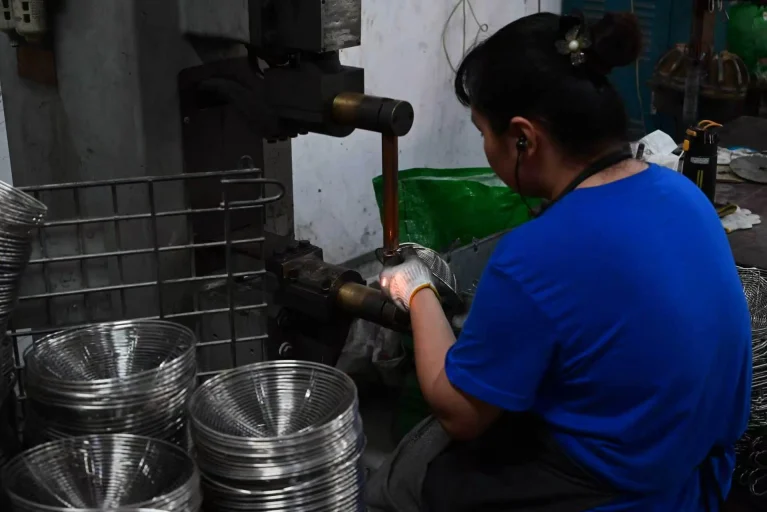
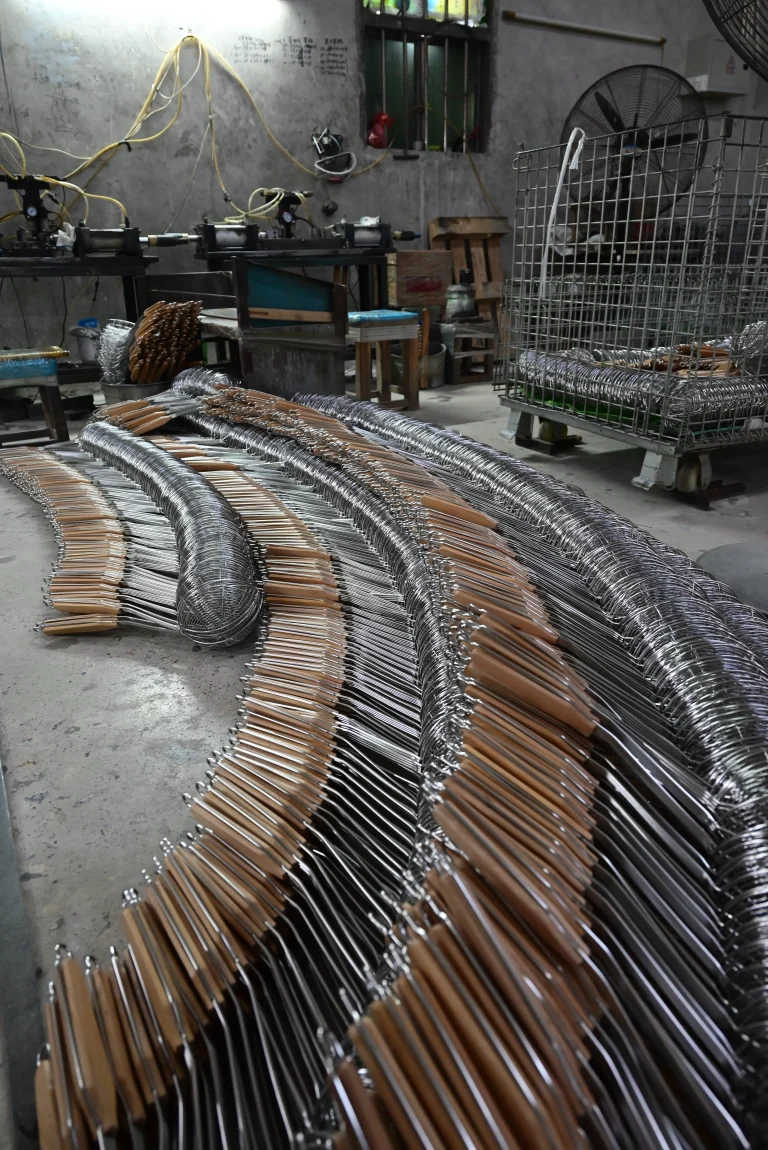
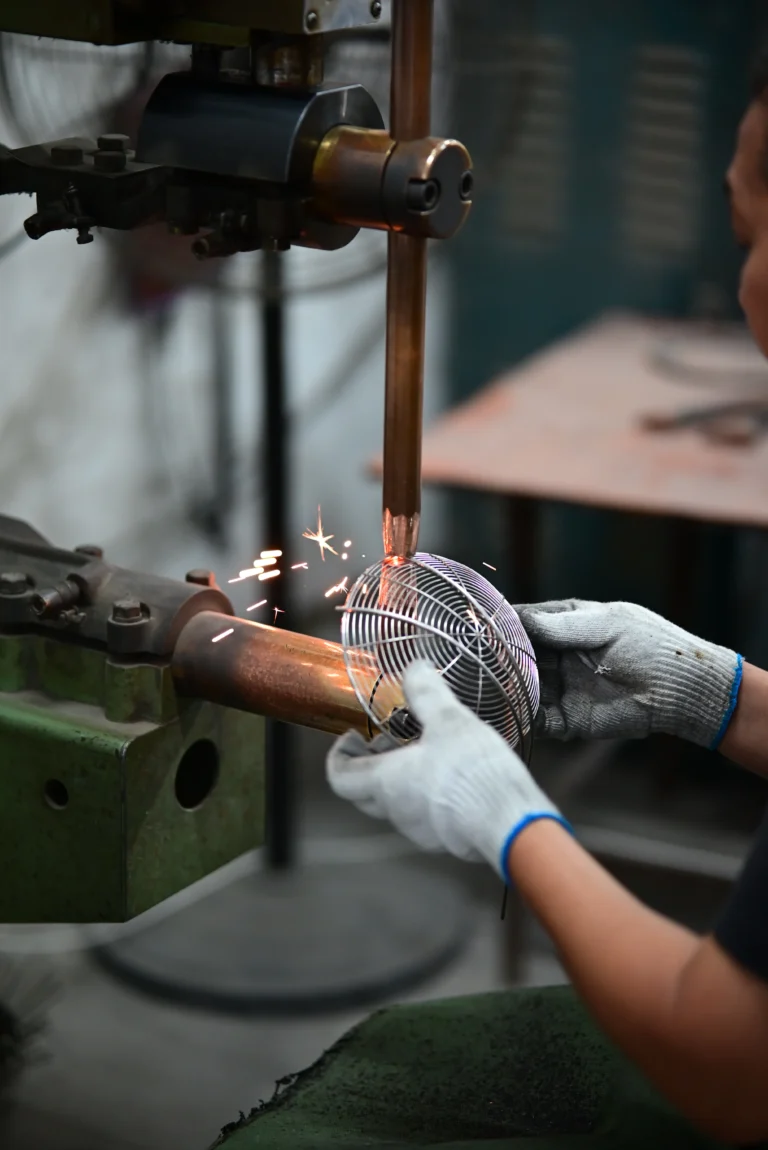
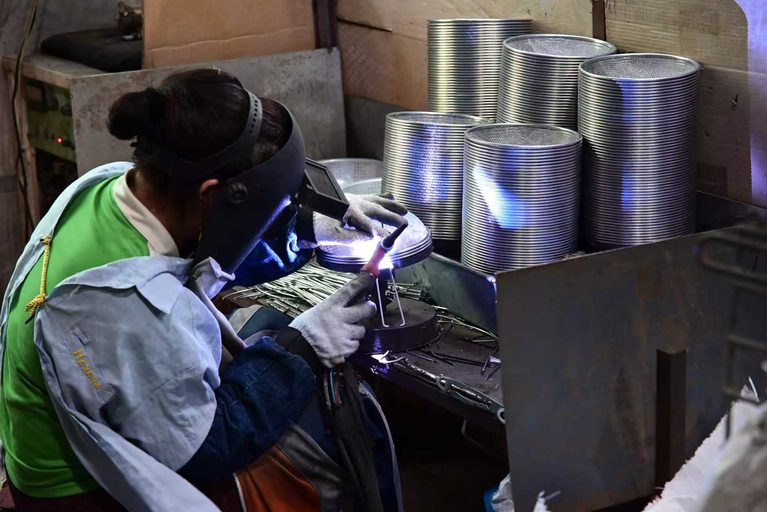
As shown in the workshop photograph, workers carry out production activities at individual workstations, surrounded by manufacturing equipment, metal components, and organized material containers.
These everyday manufacturing activities illustrate the hands-on work involved in producing metal kitchenware. While machines assist with repetitive operations, workers remain essential for component handling, assembly, and production coordination.
Skilled Workers: An Important Part of Manufacturing
Behind every finished kitchen utensil are the people responsible for transforming materials into practical products.
In stainless steel kitchenware production, workers may perform a variety of tasks, including preparing metal components, positioning wires, operating equipment, assembling product structures, and checking finished parts.
These activities require attention to product dimensions, component alignment, and handling procedures. Even small differences in assembly can influence the final appearance and functionality of a kitchen utensil.
Skilled workmanship is therefore an important element of the manufacturing process, particularly for products that involve multiple metal wires, welded connections, and different handle structures.
From Raw Materials to Finished Kitchen Utensils
The manufacturing of stainless steel kitchenware generally involves several stages. Although the exact production process varies according to product design, the following steps are commonly involved in producing stainless steel wire skimmers and strainers.
1. Material Preparation
Production begins with preparing the metal materials and components required for each product. Stainless steel wires, metal frames, handles, and connecting parts must be selected according to the intended product specifications.
Material dimensions and suitability are important considerations because they influence the structure and functionality of the finished utensil.
2. Wire Forming and Shaping
For stainless steel wire skimmers, metal wires are formed into the required basket structure. Different products may feature open-wire baskets, reinforced wire arrangements, or fine mesh designs.
Accurate forming helps maintain the intended basket dimensions and supports consistent product appearance.
3. Component Assembly
Once the individual components are prepared, they are positioned and assembled according to the product design.
This stage may involve connecting the basket structure to a metal frame or handle. Proper positioning helps maintain the intended shape and alignment of the finished kitchen utensil.
4. Welding and Structural Joining
Welding is an important manufacturing process for many stainless steel kitchen utensils. It is used to connect metal components and create structural joints.
Careful welding helps support the stability of the product structure. The position and appearance of welded connections are important considerations during manufacturing and product evaluation.
5. Surface Finishing
After assembly, metal components may undergo finishing operations to improve their appearance and remove unwanted manufacturing marks or sharp edges.
Appropriate finishing helps create a cleaner product appearance and contributes to comfortable everyday handling.
6. Product Inspection and Preparation
Before products are prepared for distribution, manufacturers should check relevant specifications, including dimensions, product structure, appearance, and packaging requirements.
These checks help identify potential manufacturing issues and support consistency across products of the same model.
Why Organized Production Matters
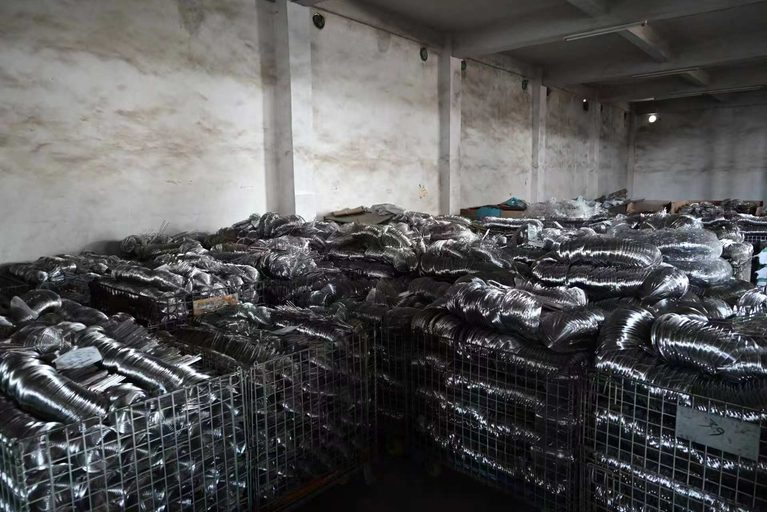
Kitchenware manufacturing often involves different product sizes, handle styles, basket structures, and material specifications. Organized production activities help manufacturers coordinate these variations and maintain clear workflows.
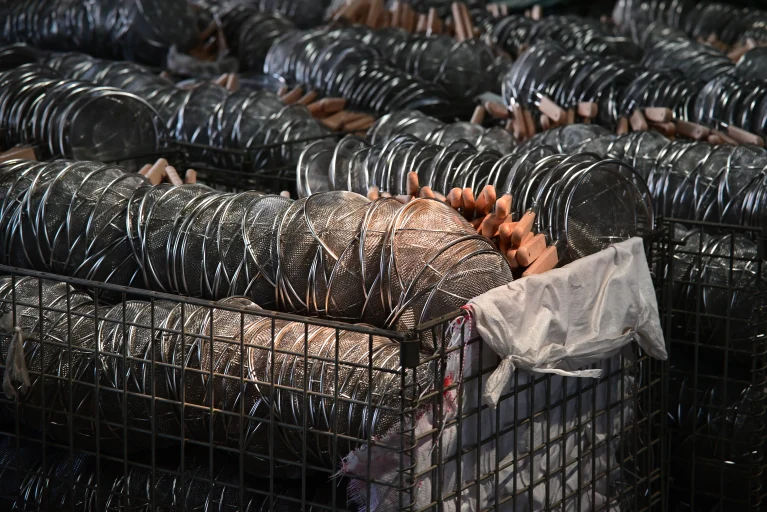
Separating materials, components, and products by model can help reduce confusion during production. Clearly identified workstations and suitable material storage also support smoother movement between manufacturing stages.
For wholesale buyers, production organization is an important consideration because consistent product specifications and clear manufacturing procedures can support more reliable purchasing arrangements.
Attention to Detail in Stainless Steel Strainer Production
Stainless steel strainers may appear simple, but their manufacturing involves multiple structural details.
The spacing of metal wires, the shape of the basket, the connection between the handle and basket, and the finishing of exposed edges can all influence product usability.
For example, an open-wire skimmer requires a basket structure that supports food while allowing cooking liquids to drain efficiently. A fine mesh strainer, on the other hand, uses smaller openings to help retain smaller ingredients.
Different applications therefore require different manufacturing considerations. Understanding these details helps buyers select suitable products for their target markets.
Manufacturing Different Types of Kitchen Strainers
Kitchenware buyers often require a variety of product designs to serve different cooking environments. HEQIA HARDWARE offers multiple categories of stainless steel kitchen utensils with different structures and specifications.
- Stainless Steel Wire Skimmers: Open-wire baskets designed for convenient lifting and draining of food ingredients.
- Four-Wire Strainers: Wire skimmer designs featuring additional structural support.
- Double-Fork Strainers: Kitchen strainers with two-pronged support connections between the basket and handle.
- Stainless Steel Mesh Strainers: Fine mesh baskets suitable for draining and filtering smaller food ingredients.
- Austenitic Stainless Steel Strainers: Kitchen strainers made with specified austenitic stainless steel materials.
- Kitchenware Sets: Practical utensil combinations for household and commercial kitchen applications.
Different basket dimensions, handle materials, and product weights allow buyers to choose kitchenware according to their intended applications and purchasing requirements.
What International Buyers Should Look for in a Kitchenware Supplier
For importers, distributors, and wholesale buyers, selecting a suitable kitchenware supplier requires careful consideration of product specifications and manufacturing capabilities.
Beyond product appearance, buyers should evaluate the details that influence purchasing decisions and long-term product consistency.
- Product Range: Check whether the supplier offers the required kitchenware categories and specifications.
- Material Information: Confirm the materials and stainless steel grades used in the products.
- Product Dimensions: Review item numbers, basket sizes, overall lengths, and product weights.
- Manufacturing Workmanship: Examine component alignment, welded connections, and surface finishing.
- Sample Evaluation: Request samples when necessary to examine the actual product before bulk purchasing.
- Packaging Requirements: Confirm packaging methods and shipping arrangements according to the order.
- Communication: Provide clear product specifications and quantities to support accurate quotations.
Careful supplier evaluation can help buyers reduce misunderstandings and select products that better match their market requirements.
The Value of Factory Production Experience
Manufacturing kitchenware requires an understanding of materials, equipment, product structures, and practical production procedures.
Workers who are familiar with different kitchenware designs can better understand the positioning and assembly requirements of individual components. Production equipment supports repetitive operations, while manual handling remains important for tasks requiring careful positioning and attention to detail.
For buyers, understanding how kitchenware is manufactured provides useful insight into product construction and the factors that influence quality.
HEQIA HARDWARE: Practical Kitchenware for Global Markets
At HEQIA HARDWARE, our kitchenware collection focuses on practical products designed for different cooking and food preparation requirements.
From compact stainless steel wire skimmers to large mesh strainers with extended handles, our product range offers multiple options for kitchenware distributors, retailers, restaurants, and wholesale buyers.
We understand that international purchasing decisions depend on clear product information, suitable specifications, and effective communication.
By presenting detailed product dimensions, item numbers, and available specifications, we aim to help buyers identify kitchenware products that meet their business needs.
Frequently Asked Questions
1. What products are commonly manufactured in stainless steel kitchenware workshops?
Common products include stainless steel wire skimmers, mesh strainers, frying utensils, kitchen ladles, and other metal kitchen tools.
2. Why are skilled workers important in kitchenware production?
Skilled workers help operate equipment, position components, assemble product structures, and identify visible manufacturing issues during production.
3. What manufacturing processes are involved in producing stainless steel strainers?
Common processes include material preparation, wire forming, component assembly, welding, surface finishing, and product inspection.
4. Why should wholesale buyers evaluate manufacturing quality?
Manufacturing quality influences product construction, appearance, usability, and consistency. Reviewing these factors helps buyers make more informed purchasing decisions.
5. What types of stainless steel strainers does HEQIA HARDWARE offer?
Our product collection includes stainless steel wire skimmers, four-wire strainers, double-fork strainers, mesh strainers, and austenitic stainless steel strainer models.
6. How can buyers request product information?
Buyers can contact HEQIA HARDWARE with their preferred product names, item numbers, sizes, and required quantities to request additional specifications and wholesale purchasing information.
Explore Our Stainless Steel Kitchenware Collection
Behind every stainless steel kitchen utensil are the materials, manufacturing processes, and people involved in bringing the product together. Understanding these details helps buyers appreciate the practical workmanship behind everyday kitchen tools.
Explore the HEQIA HARDWARE product collection to discover stainless steel wire skimmers, mesh strainers, and other kitchenware solutions for your business.
HEQIA HARDWARE – Stainless Steel Strainers & Kitchenware Manufacturer